

Once upon a time….

When I relocated to attend Bible College in Queensland, I spent most of my first year there boarding with an adult family. The house we lived in was on a large, open piece of land on Mount Tamborine. It was certainly a beautiful place, and I loved the peace that living there afforded me. I could lay in bed at night and actually gaze at the brilliance of the stars because there was so little pollution from artificial light. I would listen to the growly sounds of the local koalas out looking for a good time at night, and I also developed an incredible fondness for one of the ugliest birds around – the scrub turkeys that inhabited the region – all of which I promptly named Gary.
One of the more sobering things I found about living in Queensland was the large amount of reptiles I was sharing the space with. There were always countless skinks and geckos in the garden, and sometimes in the house. One of the places I lived even had resident water dragons outside. And then there’s the snakes, both venomous and non-venomous.
The family I boarded with had an African grey parrot housed in a large cage, which was situated in a central courtyard outside. She was quite the character, and often amused us with her mimicry. One evening she got her feathers in a ruffle, and it was suspected that there may be a snake trying to make a snack of her. When one of the men went out to investigate, they could see it had been a small snake, but being that it was night and the creature had quickly slithered away to safety, they were uncertain about what type of snake it might be. Despite their best efforts, they were unable to locate the snake that night.
There was concern that it might be a baby tiger snake, one of the most venomous (and potentially aggressive) snakes in the country. After that, we were all on high alert for the presence of snakes close to, or even in the house – because it was not unheard of for snakes to take up residence in people’s roof spaces.
Home alone
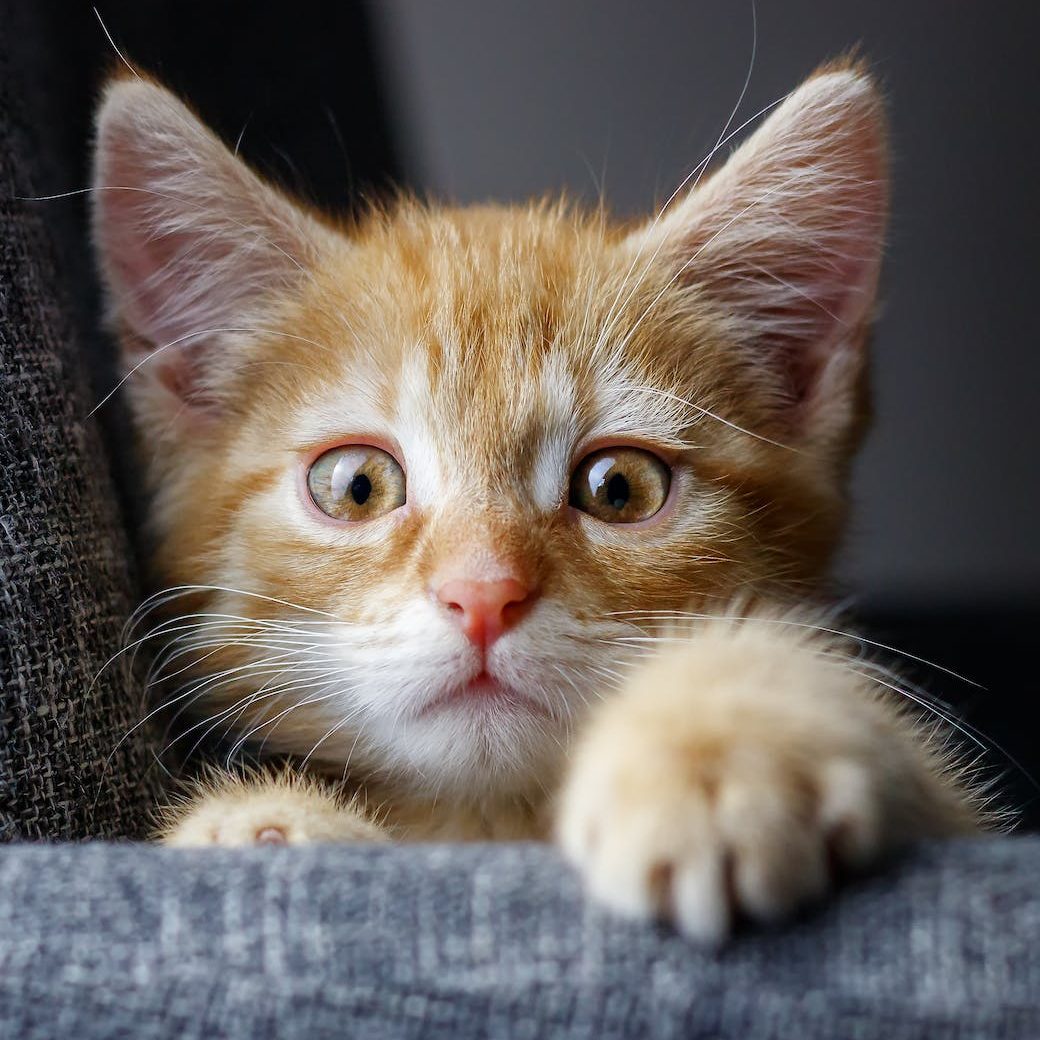
The next time I heard the bird become similarly distressed, I was at home on my own. Whilst not relishing the prospect of discovering the potential source of her distress, I nevertheless put on my big-girl pants and went outside ready to defend and protect her. It was a snake, and it was a small one, but thankfully this time it was during the day and I was able to see it clearly as it figuratively ran away. Thanks to Google, and much to my relief (!), I was able to identify it as a non-venomous tree snake.
Now, I am generally a curious type. My friends would probably tell you that was true in both senses of the word; but I had never been in such close proximity to a snake before, so I was fascinated to watch – from a safe distance – as the snake quickly retreated from me. It headed for the relative safety of the garden, and to my surprise, sat there watching me. I was surprised to realise that this creature, that I had only moments before been afraid of, was now afraid of me.
Because I stood still and did not appear to be a threat, the snake tentatively furthered its escape by crossing from one garden bed to another before actually slithering up a palm tree. I watched in wonder, because I didn’t even know snakes could do that! The whole time I could sense its apprehension at being around me because it kept pausing to check I had not moved, and that all was safe before proceeding.
This experience helped me to realise that my fear was a preconditioned response that had been instilled in me as a child. It was a learned fear; so to my way of thinking that also meant it could be un-learned.
To boldly go….
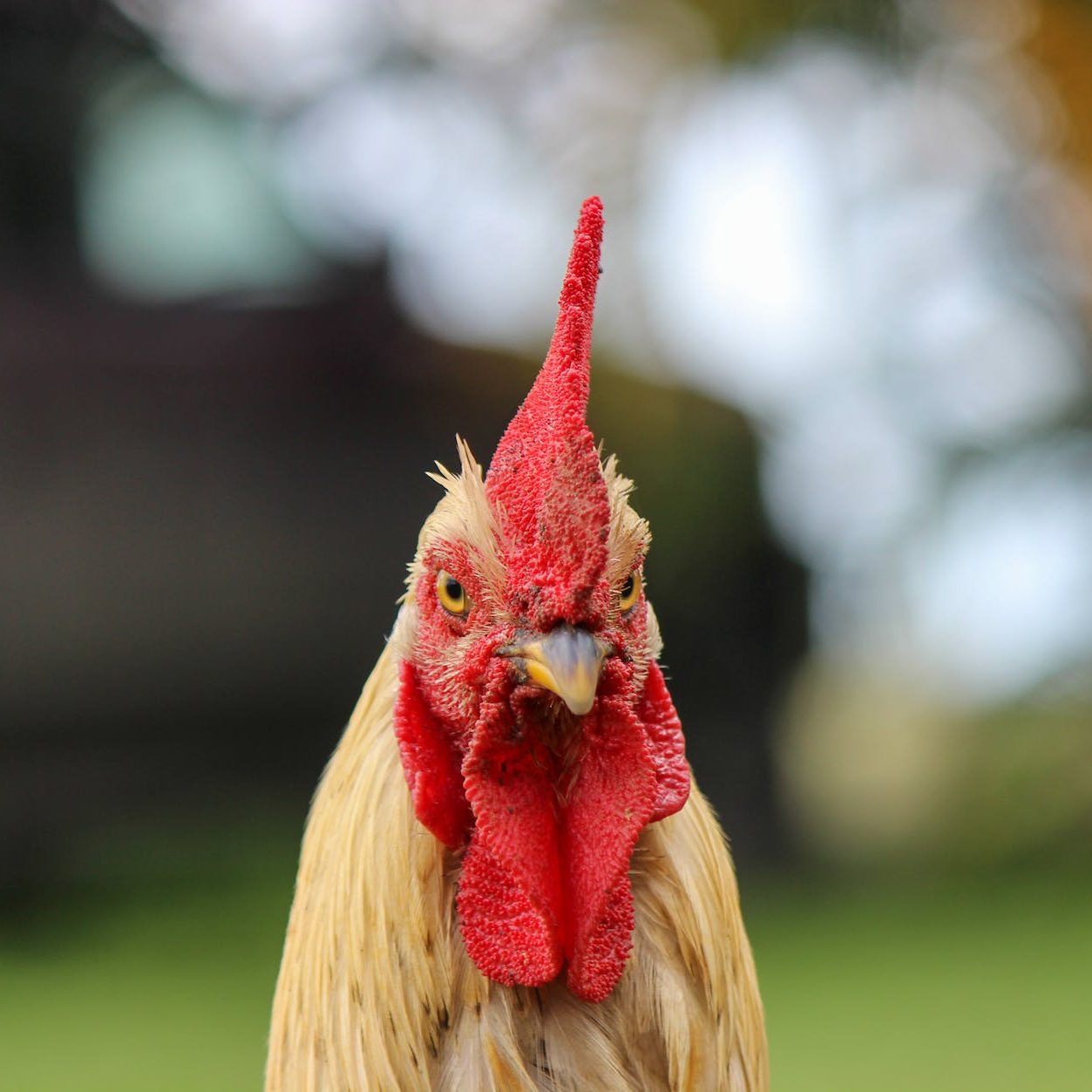
When I opened the door to boldly go where no chicken had gone before (in order to protect the parrot), I was having to contend with a fear of snakes because I had been taught as a child to fear them. As a woman in her 50’s at the time, my only experience with snakes had been vicariously through TV shows and books. I’d lived in suburbia for most of my life, where snakes were less than common, if not rare. That means the fear learnt as a child had sat dormant within me, untested and unchallenged for all that time. Once I identified my initial response of fear was a learned response, I was able to confront it, and effectively un-learn it.
In a way, that dormant fear had remained unattended in the recesses of my mind much the same way as our brain filters out extraneous things from our attention when we drive the same road over and over. You’re still kind of aware of what’s there and what’s going on at some level, but you don’t need to focus on it, because it was there yesterday, and the day before, and the day before that.
That childhood fear had been there everyday since I learnt it, and had kept me from potentially playing with, or even getting near snakes as a child. It was taught to me by people that cared about me in their attempt to protect me; but I was certainly no longer that child in need of protection.
To be master over my initial fear, I needed to renew my mind. I needed to consciously and deliberately recognise that my fear was unfounded because it was based on indistinct and generalised facts. As an adult, I now had the ability to grow in wisdom and understanding about snakes by increasing my knowledge about them. I needed to replace the outdated information I had from childhood with new facts such as:
- I was definitely bigger than the snake,
- that I had a God-given dominion over it,
- that it had no more desire to interact with me than I did with it,
- that we both understood the laws of predator and prey in nature, and that any problems between us were unlikely to be personal.
I didn’t need a generalised fear any longer because I was now equipped with better facts. That meant I was (theoretically!) able to exercise wisdom. As an adult, I now needed to be aware that I was sharing a living space with other creatures that had just as much right to be there as I did; to respect that some of them might be dangerous to me just as I might be dangerous to some of them, and to exercise wisdom in the nature of any interactions between us. I had to renew my mind.
Food for thought
And it occurs to me that perhaps we need to do the same thing with many of the things we fear. Not just fear of critters like snakes and spiders and clowns (!), but to address the fear associated with particular words and phrases.
Like the word cancer. Most of us hear that word with a big ‘C’. We speak of it in hushed and sombre tones because we have been taught to fear it. We especially fear hearing it from a medical professional. We have learned to fear the word because we have been conditioned since childhood to look to the medical profession first in matters of health. We regard them as having authority because they possess a greater degree of knowledge than most of us about sickness, disease and our bodies. We tend to trust in that authority so completely that we are willing to permit them to do incredibly painful and invasive things to our bodies just because they tell us it is needed.
Hearing the word ‘cancer’ can trigger an automatic fear response within us because we have been trained to expect, at worst, a poor outcome; and at best, a struggle. We have been conditioned to accept a medical report and believe the prognosis because it was given by someone we have been trained to accept as having authority. And yet, as believers, don’t we have a higher authority?
Conditioned fears

We have inadvertently been conditioned from childhood to attribute sickness with power, and to consider our only weapon against it is medicine. That means we are also attributing power to medicine.
When people become unwell, we can see ourselves as though caught in the middle of a battle between the two. In my reckoning, that automatically creates a problem – because then there is a subconscious expectation that one or the other must prevail, and that we have little to no control over it.
Please note that my intention here is not to belittle or devalue the struggle some of you may have experienced with health issues, but rather to encourage us all to perhaps take a different perspective.
Natural vs Super-natural
In the natural world, we are inclined to look to (and trust in) statistics, and the attitudes and opinions of medical professionals to determine the degree of power we attribute to any sickness or medicine. For example, people don’t generally go into a meltdown if they get a cold. But if the sickness was cancer, there is more likely to be a fearful belief that sickness might win because we’ve been conditioned to believe that medicine cannot always prevail over it.
As born again believers though, we have access to a power greater than sickness or medicine. But if we do not first address the conditioned fear instilled within us from childhood, then we will be looking at sickness and medicine through a distorted lens. If we fail to consider and address our conditioned fears, it would be like we become spectators watching two armies facing one another in battle, and we just watch to see who will be victorious. If one of those armies is the power of sickness, and the other the power of medicine, then we see the battle as happening within our bodies on a natural level.
But as born again believers, we have the option of seeing the battle on a super – natural level. Here, the battle is happening within our minds and belief system more than in our bodies. In this scenario, if you imagine sickness and medicine as allies trying to face down the power of God – well, there is no contest.
“Behold, I am the LORD, the God of all flesh. Is there anything too hard for Me?
Jeremiah 32:27 NKJV
It was the power of God that created the whole world from nothing. And even though we corrupted that world, Jesus Christ has already paid the price for that corruption and we need no longer be subject to it.
Garden of the mind
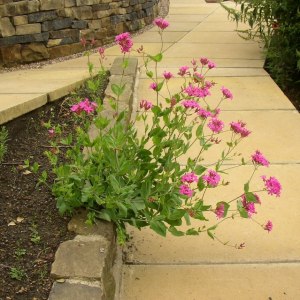
Whenever we plant a garden, we envisage how that garden should look. We carefully choose the plants we want, and any plant growing that we do not want, we call a weed. A weed doesn’t know it’s a weed. It didn’t choose where it would be sown or how it would grow. It does not have a vendetta against our having a lovely garden (although sometimes it might feel that way -.-). It’s just a plant, and it can only grow according to its nature.
The fact is that a cancerous cell is just a cell that is misbehaving because it has been corrupted. It doesn’t know that it’s been corrupted, and it doesn’t know that it shouldn’t be there. It isn’t inherently evil and intent upon our destruction, because it’s just a cell.
The Real Battle
The real battle we face is within our minds. Conditioning from childhood, especially when coupled with any previous experience of sickness in our lives, tends to create a well established belief within us that can stand like a wall between us and the wellness we desire. Even if we are not directly conscious of it, that still means the power of God must first contend with our thinking. He will need to recalibrate our perspectives and tear down that wall before He can freely sweep in and occupy our minds in order to enforce the wellness that Jesus purchased for us.
By believing in Jesus and receiving his forgiveness and redemption, we become buried within him; encapsulated by him. Any sickness that dares to assault us, is actually facing down with Jesus. If we were to imagine a showdown between the power of God and the powers of sickness and medicine, then perhaps we might imagine it to be much like the destructive force of a massive nuclear explosion against an ants nest.
In his rightful place within us, and ours within Him, Jesus can become like a protective forcefield that nothing corrupt can penetrate without our consent. We have the option to live in divine health. We can transition from a life of getting sick and needing healing, to continuously dwelling in a divine wellness that gloriously provides us with physical and spiritual vitality.
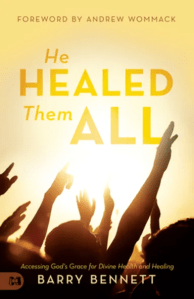
Just in case you’re interested in a little further reading, can I highly recommend to you ‘He Healed Them All’ by Barry Bennett? Barry is an instructor at Charis Bible College, and one of the most excellent and well balanced teachers I have ever come across. You can find it at:
Photos by Pixabay on Pexels.com; Patrick Illhardt on Pexels.com; Leonardo Jarro on Pexels.com: Photo by MART PRODUCTION on Pexels.com; Wild flowers in the garden u0096 Sweet William catchfly by Humphrey Bolton is licensed under CC-BY-SA 2.0


 no punches pulled
Leave a reply to Carolyn Cunningham Cancel reply